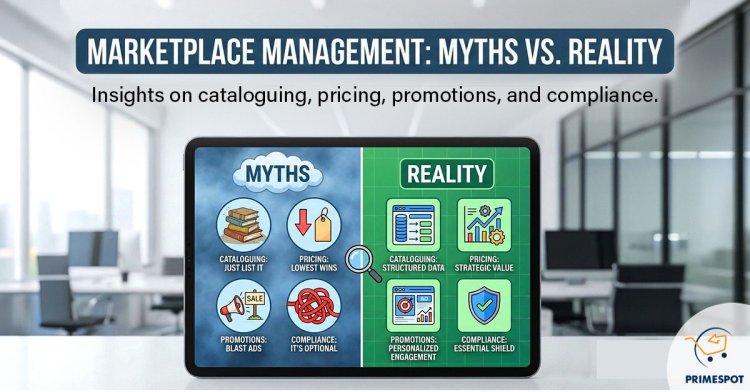
Insights on Cataloguing, Pricing, Promotions, and Compliance.
Marketplace management is often misunderstood as a plug-and-play model, list products, offering discounts, and waiting for sales to roll in. In reality, managing online marketplaces is a strategic, ongoing process that requires precision, adaptability, and deep operational understanding. Let’s break down some common marketplace management myths and uncover the reality behind them.
Myth 1: Listing a product is enough to generate sales
Reality: Effective product cataloguing is critical for visibility and conversion. Optimised titles, keyword-rich descriptions, accurate attributes, and high-quality images play a major role in how products rank and perform. Poor catalog management can lead to low discoverability, suppressed listings, or lost sales opportunities.
Myth 2: The lowest price always wins
Reality: Successful marketplace pricing strategy is about balance, not just undercutting competitors. Brands must consider marketplace fees, commissions, logistics costs, and discount burn. Dynamic pricing, competitor tracking, and margin planning are essential to stay profitable while remaining competitive.
Myth 3: Frequent promotions guarantee growth
Reality: While marketplace promotions can drive visibility, excessive or poorly planned discounts can dilute brand value. Strategic promotions, such as event-led campaigns, bundles, or limited-time offers, deliver better results than constant price drops. Timing and relevance matter more than frequency.
Myth 4: Compliance is a one-time task
Reality: Marketplace compliance is continuous. From legal metrology and category-specific guidelines to brand approvals and content policies, non-compliance can result in listing takedowns, penalties, or account restrictions. Proactive monitoring is key to long-term stability.
The Reality of Marketplace Management
True online marketplace optimisation lies in aligning cataloguing, pricing, promotions, and compliance with data-driven insights. Brands that succeed treat marketplace management as a growth function, not just an operational task.
When catalogues are optimised, pricing is strategic, promotions are purposeful, and compliance is consistent, marketplaces become powerful revenue channels, driving sustainable growth, brand visibility, and customer trust.