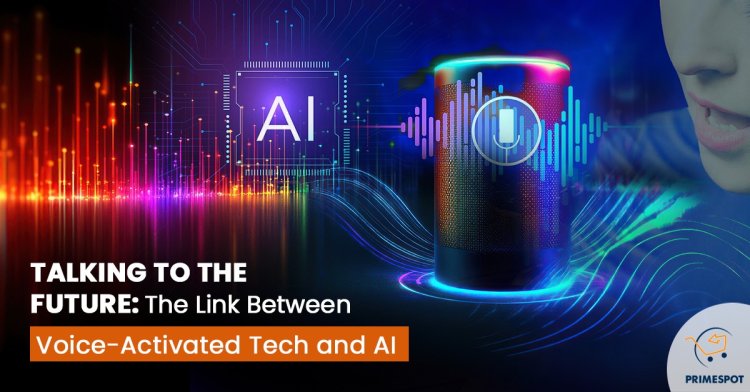
From asking Alexa to dim the lights to dictating messages on your phone, voice-activated technology has become an increasingly integral part of our everyday lives. But behind every "Hey Siri" or "Okay Google" lies a powerful force that’s constantly learning and evolving, Artificial Intelligence (AI).
Voice Tech Is Only the Surface
At first glance, voice-activated devices seem like simple tools designed to make our lives convenient. But their true capability lies in how they interpret, process, and respond to human speech. That’s where AI steps in. Through natural language processing (NLP), machine learning, and pattern recognition, AI enables these devices to understand not only words but also intent, context, and even emotion.
How AI Makes Voice Assistants Smarter
AI doesn't just listen, it learns constantly, and there is no downtime to learning or a rest day. Every interaction helps voice assistants improve their understanding of accents, slang, speech patterns, and preferences. Over time, this allows your device to deliver more accurate answers, anticipate your needs, and even personalize your experience. For example, your smart speaker may start playing your favorite morning playlist without being asked, because it knows your routine.
The Power of Real-Time Learning
One of the most fascinating links between voice tech and AI is real-time adaptability. AI systems update and evolve constantly, drawing from massive datasets and user interactions. This enables voice assistants to handle complex tasks like scheduling, searching, translating, and even holding human-like conversations.
The Future: From Command-Based to Conversational
As AI advances, voice-activated tech is moving from being task-oriented to becoming more conversational. Imagine a voice assistant that doesn’t just respond to commands but engages in a dialogue, understands nuance, and remembers past interactions. We’re already seeing this with generative AI being integrated into voice interfaces.
The connection between voice-activated technology and AI is not just functional, it’s transformational. It’s shaping a world where we no longer just use technology, but communicate with it. As these systems become more intuitive and responsive, the line between human interaction and machine assistance continues to blur.
We're not just talking to our devices anymore; they're starting to talk back in ways that feel remarkably human.